
Archive Record
Images
Metadata
Catalog Number |
1987.3.0176 |
Title |
[Reel-to-reel tape recorded by Louis Armstrong] |
Object Type |
Tape |
Collection |
Louis Armstrong Collection |
Description |
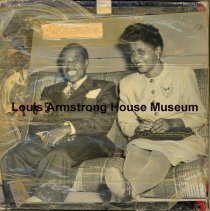
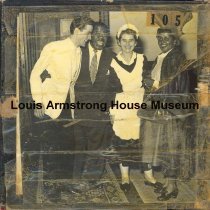
Scope: Louis Armstrong and pianist Herman Chittison are interviewed by John McCullum. Louis and Chittison reminisce and play a few selections. Both sides of tape box contain photos of Louis and Lucille Armstrong that are no longer affixed. Contents (as on compact disc reference copy): Disc 1, Tracks 1-3: Recording of Louis Armstrong sound recording, "Satchmo Plays King Oliver": "Jelly Roll Blues"; Track 2: "My Old Kentucky Home"; Track 3: "Chimes Blues"; Tracks 4-7: Recordings of Virgil Carl Shamburger sound recording "Songs of Midland Texas" (session tape with count-offs before each tune): Track 4: "Blues When You're Waking"; Track 5: "Go Away Satan"; Track 6: "Good Lord Keep an Eye on Me"; Track 7: "I Know the Back Roads of Love"; Track 8: "Going to Shout All Over God's Heaven" (unknown female vocalist); Tracks 9-12: Radio interview in Tampa, Florida with Jack Triplet; past performance in Tampa; musicians in current group - Trummy Young, Peanuts Hucko, Danny Barcelona, Mort Herbert, Marty Napoleon, Velma Middleton; Louis's recent travels (Caribbean, West Indies, Jamaica); advertising his free health chart (instructing people to write to Joe Glaser for chart at 745 5th Ave, NYC); Swiss Kriss; story about how he caught his illness in Spoleto, Italy; the change in his diet and lifestyle as a result of illness; eating spaghetti in Italy; Track 10: his birthday; talks about not retiring; they live in Corona; Track 11: Big bands that he likes - "likes all bands that play good and right"; recording of his records on tape, indexing his tapes; rock and roll in his day was "sanctified music" from the church; "First love is music" - his tastes not linked to one style of music; talks about sitting in church with his mother; "Some of the rock and roll is so beautiful."; playing in Miami at the Fontainebleau and the Deauville; Track 12: the respect he gets as leader of the band; professionalism in music; how musicians were more concerned with watching box office than playing music (they need to play the same in front four people as they would in front of a full house); judge asking about his voice at his divorce hearing, and his getting married immediately after; more discussion on health chart; all illness comes from the stomach; Track 13: "The Thrill is Gone" (unknown female singer); Track 14: "St. James Infirmary" (unknown male singer); Tracks 15-18: Recordings of Jelly Roll Morton Library of Congress sound recording "The Winin' Boy": "Honky Tonk Blues"; Track 16: "Monologue on New Orleans Honky Tonks"; "Honky Tonk Blues II"; Track 17: "If I Was Whisky and You Was a Duck"; Track 18: "The Winin' Boy II" (incomplete); Disc 2, Tracks 1-2: Recordings of Jelly Roll Morton Library of Congress sound recording "The Winin' Boy": "The Winin' Boy" II; Track 2: "The Winin' Boy"; Tracks 3-10: John McClellan interviews Louis and Herman Chittison on WHDH on "Dateline Boston - The Jazz Scene," May 4, 1960: Louis talks about recording "St. Louis Blues" in 1934; mentions Vernell Pratt; the Vox album "Paris 1934"; story about N. J. Canetti's wife asking saxophonists, "Can you put it in the mouth?"; Louis recalls songs recorded in Paris; sings part of "Will You, Won't You Be My Baby"; German vocalist who sang with them in 1934; Track 4: Louis and Chittison perform "On the Sunny Side of the Street"; Track 5: Louis says that version of "Sunny Side" is his favorite recording; mentions Jimmy McHugh; issuing the album on LP; Louis gave that album as a present to Danny Kaye, who put "Sunny Side" on while filming "A Song is Born"; writing a tune with Lionel Hampton for that film; seeing the preview of "Cabin in the Sky" with Joe Glaser and noticing that most of Louis's scenes were cut; Glaser vowed to be there next time a film is edited; Chittison mentions being with the radio show "Casey, Crime Photographer" for eight years; Louis mentions playing at Blinstrub's; Louis tells story about being at the Hotel Roosevelt with Velma Middleton before blacks were allowed to walk through the front door; Track 6: Chittison tells a story about playing with Louis in Zurich and the audience calling Louis back on stage three or four times and Louis topping himself each time; reminisce about Louis's European bands; rehearsal in London where Louis told the musicians, "Swing, you cats," and they ran off; Track 7: Louis and Chittison perform "Mack the Knife"; Track 8: Louis says he's supposed to be with Decca but now he's free-lancing between contracts; Joe Glaser signs Louis up with the other labels; Louis talks about going to London in 1932; Nat Gonella had Louis's suit pressed so he could make a conference for musicians; Louis getting the name "Satchmo" from Percy Brooks (Louis mentions it was his trumpet player, Charles D. Johnson who Louis asked about what Brooks meant); story about Louis being called "Satchus"; Louis tells a story about someone in San Francisco who called him "Ol' Sackerface"; Track 9: Louis and Chittison perform "I'm Confessin' (That I Love You)"; Track 10: Joke about sending that performance to Decca; Louis mentions Milt Gabler and recording "Satchmo: A Musical Autobiography"; Louis tells John McClellan to send a copy of this to Gabler; discussion about Louis and Chittison's respective first trips to Europe; story about Grover Compton acting as Louis's interpreter; importance of coming back home; Louis performing "Star Spangled Banner" so the audience "doesn't forget that flag"; patriotism; playing "God Save the Queen"; Louis as unofficial Ambassador of music; Louis doesn't know anything about politics; Swiss Kriss; Louis giving details about his diet chart; Louis running into someone at the DuSable in Chicago who asked Louis who played the solo on "C'est Si Bon" and how Billie Holiday chased him away, saying, "Who can?"; close of show; Tracks 11-18: Bill Marshall audio message for Louis, introducing old records to copy onto this tape; information about Alessandro Liberati; Track 12: "Remembrances of Switzerland" (Alessandro Liberati); Track 13: introduction by Marshall; Track 14: introduction by Marshall; "Lillian" (Herbert Clarke); Track 15: introduction by Marshall about Clarke; introduces a tape of Marshall playing the trumpet on "What's New"; plays "What's New"; Track 16: comedy routine between Louis and Bing Crosby from "Pennies from Heaven"; "The Skeleton in the Closet" (Louis Armstrong, from "Pennies from Heaven"); Track 18: introduction by Marshall; "Pyramids (Polka)"[unidentified Edison cylinder] (Alessandro Liberati) (Pietro Capodiferro); Track 19: Bill Marshall closes the tape; promises to send Louis some more. |
People |
Armstrong, Lucille Wilson Chittison, Herman Glaser, Joe Kaye, Danny McCullum, John Pratt, Vernell |
Search Terms |
Cabin in the Sky (motion picture) France Melody Maker (magazine) Paris Swiss Kriss Switzerland Zurich (Switzerland) |
Year Range from |
1959 |
Year Range to |
1960 |
Creator |
Louis Armstrong |
Caption |
1987.3.176 Front |
Accession number |
1987.3 |